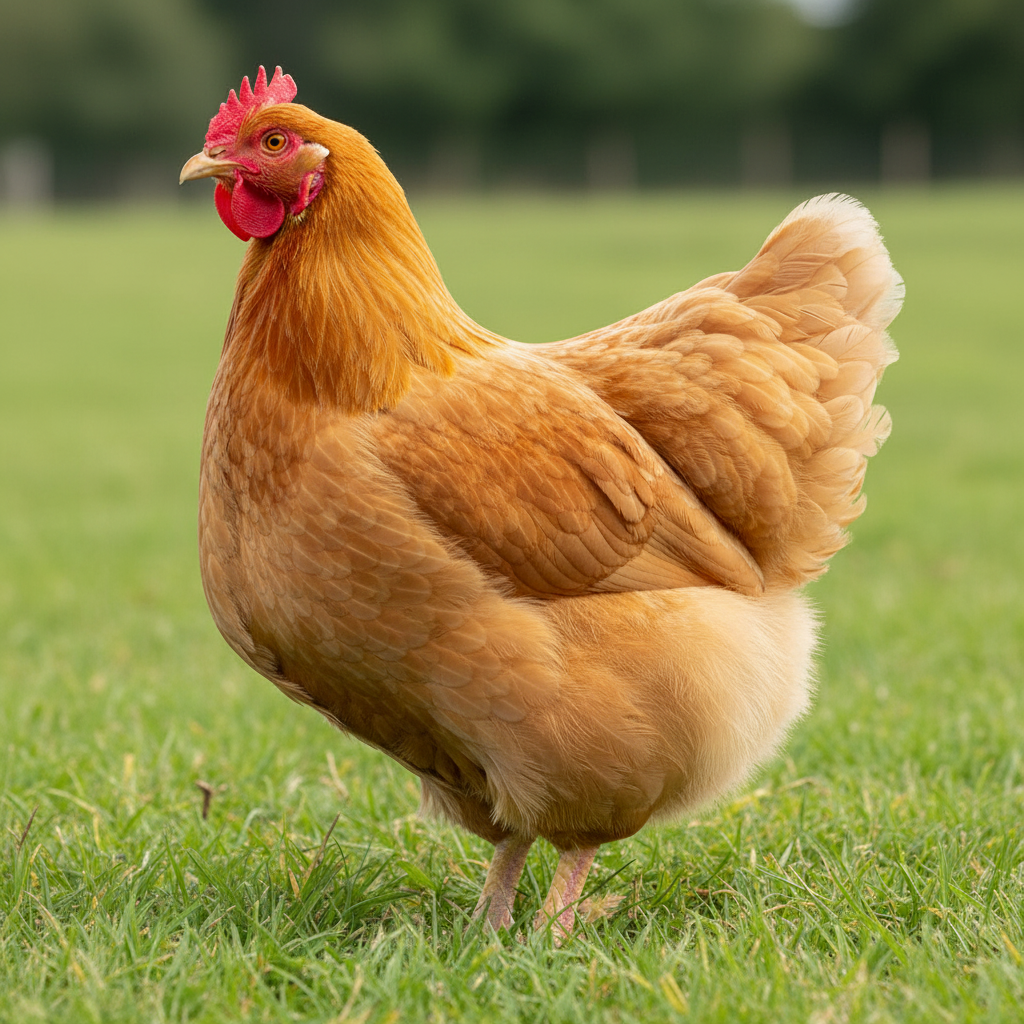
Illustration (AI rendered)
Orpington
Also known as: Buff Orpington
Big, fluffy, sweet — the golden retriever of chickens.
About the Orpington
Orpingtons are large, robust birds known for their soft, fluffy feathers and friendly demeanor. They come in various colors, the most popular being the Buff, which features a warm golden hue. Their calm and sociable temperament makes them ideal for backyard flocks and families. These birds are also good layers, providing medium to large brown eggs.
History
The Orpington breed originated in the late 19th century in Kent, England, developed by William Cook. He sought to create a dual-purpose chicken that excelled in both meat production and egg-laying. The breed quickly gained popularity and spread to many countries, becoming a favorite among poultry enthusiasts.
Care tips
Orpingtons are hardy birds, well-suited for various climates due to their dense feathering. They thrive in spacious coops and pens, as they enjoy a good amount of room to roam. While they are typically calm, some hens can be broody, making them excellent mothers if you desire to raise chicks. Ensure access to shade and fresh water in warmer months.
Color varieties
Fun facts
- Orpingtons were first developed in the 1880s in England.
- They are known for their excellent foraging abilities.
- Buff Orpingtons are often seen in poultry shows for their striking appearance.
- This breed became popular in the U.S. in the early 1900s.