
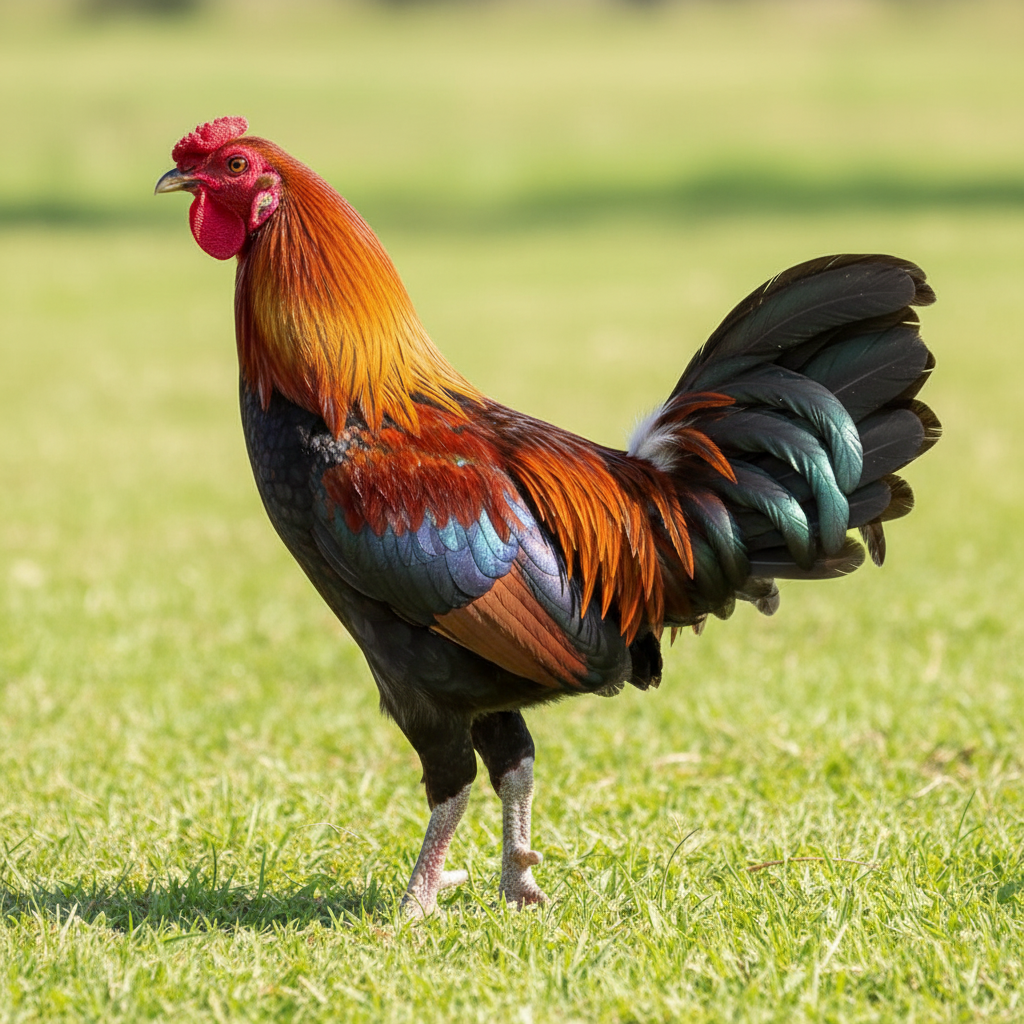
Illustration (AI rendered)
Aseel
Also known as: Asil
Ancient Indian fighting fowl, now kept for muscle and personality.
About the Aseel
Aseels are robust chickens known for their muscular build and distinctive appearance, featuring a broad head and a strong beak. Their plumage can vary widely, with colors including black, red, and gold, often exhibiting vibrant shades. This breed is known for its spirited temperament, often displaying a bold and assertive personality, making them both fascinating and engaging to keep. Aseels are highly intelligent and can form strong bonds with their keepers.
History
The Aseel breed originated in India, with roots tracing back several centuries, and is one of the oldest fighting fowl breeds. They were developed for their strength, stamina, and combat skills, primarily in the Indian subcontinent. Over time, Aseels spread to other parts of Asia and the world, admired for their unique physical traits and gameness.
Care tips
Aseels are hardy birds that can thrive in different climates but prefer spacious environments to roam. They have a strong broody instinct, making them excellent mothers if allowed to hatch their own chicks. Providing a secure area is essential, as their assertive nature can lead to conflicts with other breeds. Regular social interaction will enrich their lives and promote a better temperament.
Color varieties
Fun facts
- Aseels are known for their unique gait, which is often described as 'pigeon-like.'
- They have a strong instinct to fight, making them less suitable for mixed flocks.
- Aseels can live up to 10 years with proper care, despite their fighting heritage.
- Their meat is considered high quality and flavorful, favored in some culinary traditions.